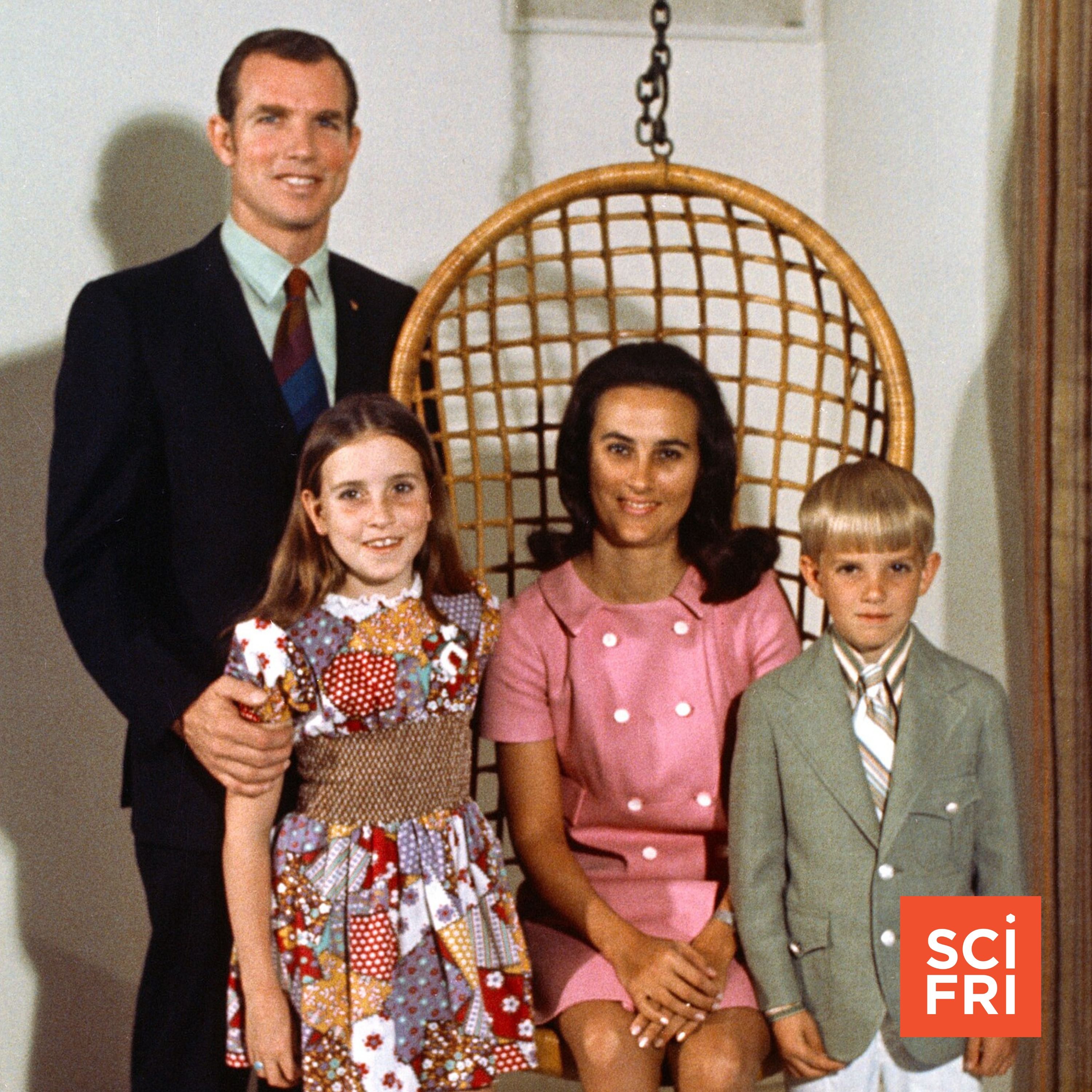
The episode examines the sociological impact of space missions on astronauts' families, drawing on Tracy Scott's research and personal experience as the daughter of Apollo astronaut David Scott. It contrasts the Apollo era's communal, media-saturated family life with today's more connected but individualistic culture, highlighting the wives' unacknowledged diplomatic and emotional labor. Key data points include an 80% divorce rate among Apollo-era astronaut marriages and the 'squawk box' system that piped mission control audio into homes.
Why listen
It offers a rare, firsthand sociological perspective on the emotional and familial toll of space exploration, grounded in both personal memory and academic research.
Key takeaways
01Astronaut families in the Apollo era lived in a tightly knit, media-heavy bubble where wives performed extensive unpaid diplomatic and community roles akin to 'first ladies'.
02The lack of real-time communication meant families relied on mission control audio feeds (squawk boxes) and endured prolonged separation, contributing to an 80% divorce rate.
03Modern missions like Artemis show a cultural shift: astronauts openly express love and connection, reflecting a need to rebuild communal values in an individualistic era.
Best for
people interested in space history's human sidesociology or family dynamics researcherslisteners exploring how collective missions shape identity