SIGNAL//SYNTH
Science

≤ kg

aired Jun 13, 2014 · 22.0m
Signal
85.0/ 100
Essential
confidence 0.95
Orig85.0
Actn50.0
Dens90.0
Dpth88.0
Clty90.0
Summary

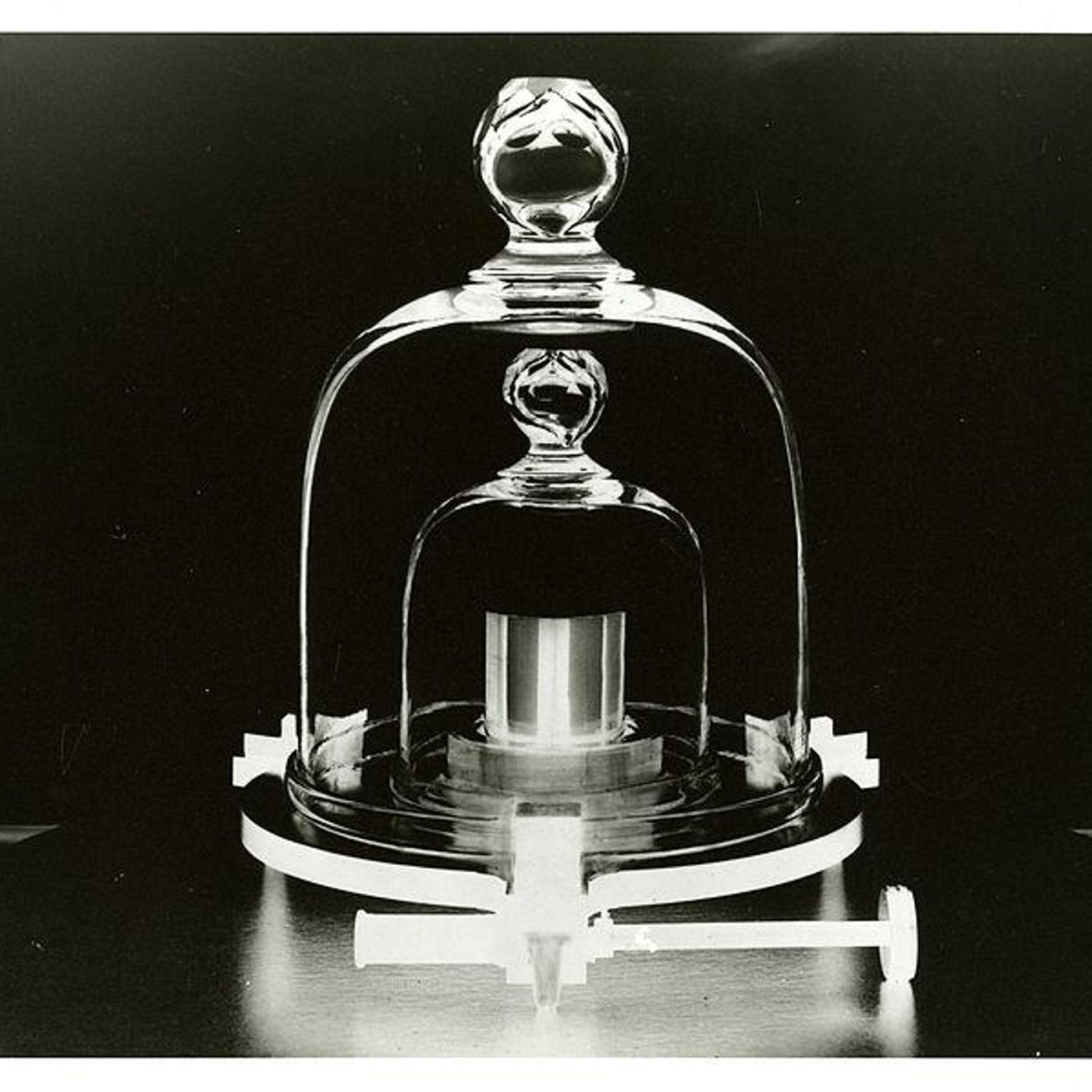
The episode traces the history and fragility of the kilogram, the last physical standard of measurement, which was defined by a platinum-iridium cylinder in France. It reveals how, in 1989, the international prototype kilogram was found to have lost mass relative to its official copies, undermining its role as an unchanging standard. The episode culminates in the scientific effort to redefine the kilogram using the Planck constant, anchoring it to a fundamental physical constant rather than a physical object.

Why listen

It transforms a seemingly mundane unit of measurement into a profound narrative about human precision, the fragility of standards, and the shift from physical artifacts to universal constants in science.

Key takeaways
  1. 01The kilogram was historically defined by a physical object—the International Prototype Kilogram (IPK)—stored in France, which served as the standard for all mass measurements worldwide.
  2. 02In 1989, scientists discovered the IPK had lost approximately the mass of a grain of sugar compared to its official copies, raising concerns about the stability of a physical standard.
  3. 03The kilogram is now redefined by fixing the value of the Planck constant, making it invariant and based on fundamental physics rather than a deteriorating artifact.
Best for
science enthusiastsphysics educatorshistory of science students